
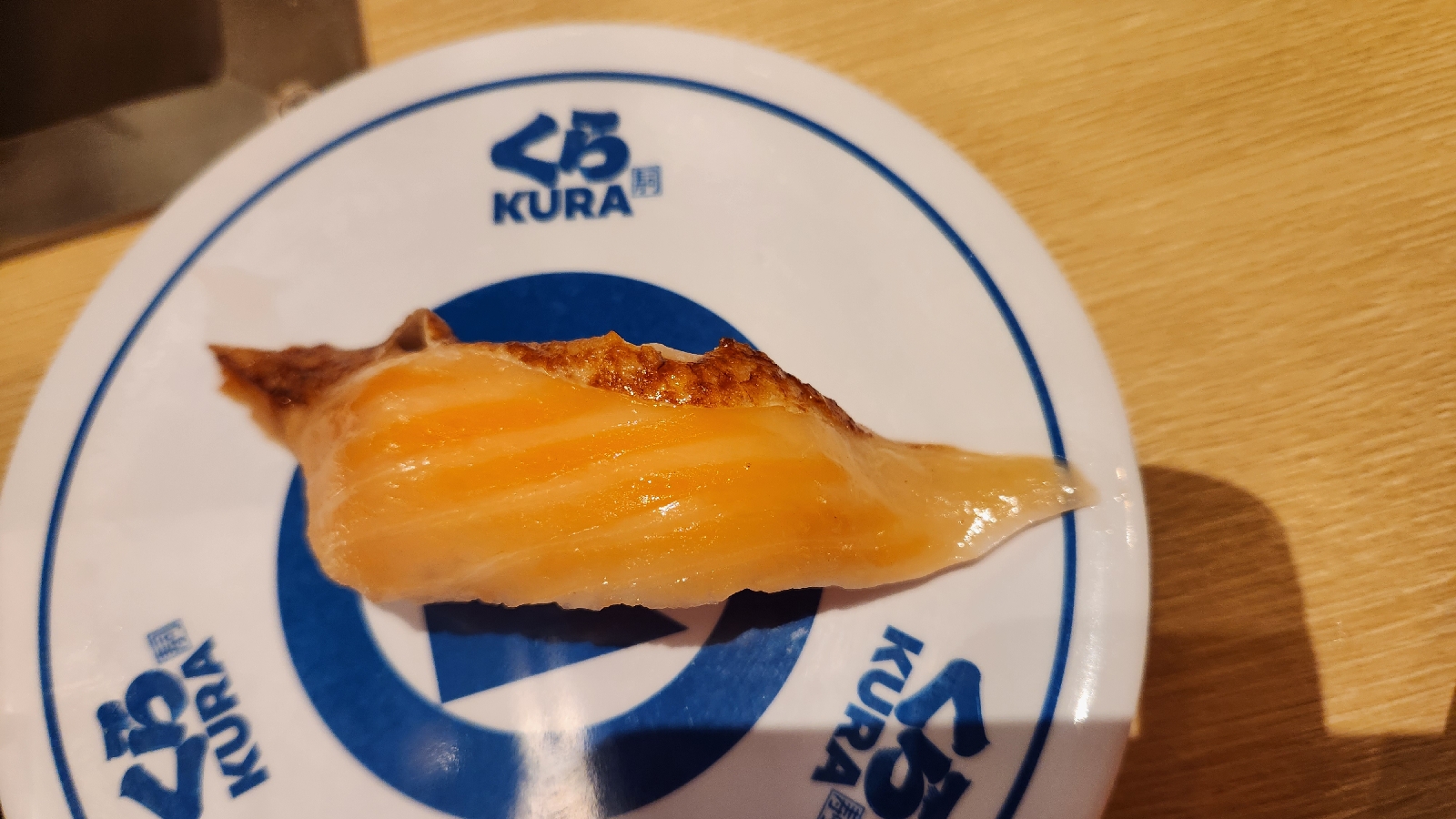
Experience the exceptional taste of Kura's Seared Salmon Nigiri, a culinary masterpiece perfect for sushi lovers. This dish combines skillfully seared, premium salmon with Kura's signature sushi rice, which is a blend of organic rice mixed with their special vinegar recipe, including red vinegar and kelp extract. The result is a fusion of flavors and textures that epitomizes Kura's dedication to freshness and traditional sushi craftsmanship. This dish is not just a meal; it's a journey through the art of sushi, enhanced by Kura's unique approach, including their use of fresh, high-quality ingredients and innovative dining experiences. Perfect for either a refined lunch or a relaxed dinner, Kura's Seared Salmon Nigiri is a must-try. Share your experience with the community of sushi enthusiasts using the hashtags #kurasushi, #searedsalmonnigiri, #sushilove, #japanesecuisine, and #gourmetsushi.
Fried Gyoza Potstickers
Fried gyoza, also known as potstickers, are a delightful Japanese dumpling with a crispy bottom and a juicy filling. Below is a straightforward recipe for making them at home:
Ingredients:
- Gyoza wrappers
- 300g of ground pork or chicken
- 1 cup of finely chopped cabbage
- 2 finely chopped green onions
- 1 minced clove of garlic
- 1 teaspoon of grated ginger
- 1 tablespoon of soy sauce
- 1 teaspoon of sesame oil
- Salt and pepper to taste
- Vegetable oil for frying
- Water for steaming
Dipping Sauce:
- Soy sauce
- Rice vinegar
- Optional: chili oil for heat
Instructions:
1. Prepare the Filling: Mix the ground meat, cabbage, green onions, garlic, ginger, soy sauce, and sesame oil in a bowl. Add salt and pepper.
2. Fill the Gyoza: Spoon a teaspoon of filling into each wrapper, moisten the edges with water, fold over to form a half-moon shape, and press to seal, creating pleats if desired.
3. Fry the Gyoza: In a pan with medium heat, add vegetable oil. Place the gyoza flat side down and cook until golden.
4. Steam the Gyoza: Add water to the pan, cover with a lid, and let steam until the water evaporates. Uncover and cook for another minute to crisp up.
5. Prepare the Dipping Sauce: Combine soy sauce and rice vinegar in a bowl, adding chili oil if you want some spice.
6. Serve: Present the gyoza with the dipping sauce while hot.
Enjoy making and eating your homemade fried gyoza. Exercise caution with the hot oil and steaming process.
9:33 PM
No comments

Devouring salmon belly nigiri sushi at the restaurant with my husband is an absolute taste sensation. This stuff is seriously delicious! Imagine this: a luscious piece of buttery salmon belly resting on a bed of perfectly seasoned rice, all in one bite. It's like a flavor explosion in your mouth, and it's just so darn good. Forget about the fancy restaurant setting; at that moment, it's all about us, relishing this incredible dish together. It's not just a meal; it's a joyful celebration of our love and fantastic food.
Salmon belly nigiri sushi, a Japanese delicacy, offers not only a delightful culinary experience but also a wealth of nutritional benefits, making it an excellent choice for individuals in their mid-40s. In this blog post, we'll delve into the nutritional advantages of this sushi variety and how it can contribute to the well-being of those at this age.
Nutrient-Rich Salmon Belly:
Salmon belly, also known as 'otoro' in Japanese, is prized for its rich and buttery texture. It's brimming with essential nutrients, including omega-3 fatty acids, high-quality protein, vitamins, and minerals, all of which are pivotal for the health of individuals in their 40s.
Omega-3 Fatty Acids:
Salmon belly is renowned for its omega-3 fatty acid content, which can reduce the risk of heart disease, lower blood pressure, and promote overall cardiovascular health—an imperative concern for those aged 45 and above.
Protein for Muscle Maintenance:
Protein is indispensable for maintaining muscle mass as we age. Salmon belly is an excellent source of high-quality protein, aiding in muscle strength, tissue repair, and bolstering the immune system.
Vitamins and Minerals:
Rich in vitamins like B12 for nerve health and vitamin D for strong bones, salmon belly also provides essential minerals such as selenium, an antioxidant, and iodine, supporting thyroid function.
Reduced Risk of Age-Related Diseases:
The nutrients in salmon belly nigiri sushi, particularly omega-3s and antioxidants, have the potential to lower the risk of age-related conditions like cognitive decline and arthritis due to their anti-inflammatory properties.
Moderation Is Key:
While salmon belly nigiri sushi offers numerous health benefits, portion control is crucial due to its calorie-dense nature owing to high-fat content. Complementing it with other nutrient-rich foods like vegetables and whole grains creates a balanced meal.
Conclusion:
Including salmon belly nigiri sushi in your diet can be a delectable and nutritious choice, particularly for individuals aged 45 and above. Its omega-3 fatty acids, protein, vitamins, and minerals can support heart health, muscle maintenance, and overall well-being. Remember to enjoy it in moderation as you embark on a path toward a healthier lifestyle.
8:10 PM
No comments
Nigiri is similar to sushi in that it contains rice and is similar to sashimi in that it contains raw seafood. However, unlike sushi, nigiri does not contain extra ingredients or seaweed, and unlike sashimi, it contains vinegar rice. It is only raw seafood served over rice. I ordered a large family platter of 57 pieces for us this year to celebrate my husband's birthday.
11:15 PM
No comments
Salmon Belly Sashimi S$21 for 7pcs — at Tampopo たんぽぽ.
With Francine, we had a great catch up after a hi-tea at 10 Scotts Grand Hyatt. Tampopo is a recommendation made by her after a 3hr shopping near Tangs and Takashimaya. We were actually quite full already but was hoping to find a place for drinks and talk more. She ordered some Japanese Green Tea and was happy to share with me this 7 pc plate of Salmon Belly Sashimi and she also ordered a Chawanmushi. It was quite fatty and huge piece of Salmon Belly with these 'Pineapple-Cut' :) I've only eaten sotong with pineapple cuts LOL
By the way, it was my first time eating Sashimi in Singapore. The reason is in the 1990s, I had my first Japanese Sushi experience in Japan Tokyo - so since then I don't go for imported sashimi! I only dine in and eat cooked sushi like Tamago or piping hot Japanese Ramen.
9:12 PM
No comments
I found out today how to make this delicious snacks. Chinese New Year is coming (25th January 2020), most families would engage maid service to get ready for house visitation during the Spring Festival. It will be Chinese New Year but in Estonia, there is almost no 'new year mood'. I saw this recipe and decided to make it anyway because I have a small batch of red bean paste in my fridge. This 煎堆, Jian Dui also has so many other names ranging from Sesame Balls, Deep Fried Glutinous Rice Red Bean Paste Balls, Vegan Dim Sum snacks, Goma Dango (Japanese), twigin chamkkaegyeongdan, 튀긴참깨경단 (Korean). I realised Vietnamese also eat them.
Besides in Yum Cha, Dim Sum (High-Tea buffet restaurants), it is sold in Singapore in the 'Old Chang Kee' stores that you can find almost at every corner of a suburban mall. So literally, you do not need to make it yourself.
Ingredients
1.5 cup glutinous rice flour
80 g sugar , about 1/3 cup+ 2 tbsp.
100 ml water or 10ml more for adjusting , include the water for small dough, around 1/3 cup+ 1 tbsp.
1/2 teaspoon baking powder , optional
1 cup roasted white sesame seeds
red bean paste , or other filling as needed
water for dipping
more glutinous rice flour for dusting
oil for frying
Instructions
Prepare the red bean paste
In a small pot, boil red beans that had been soaked overnight for about 1 hour (or til beans are soften).
In a large bowl, mix the glutinous rice flour with brown sugar and baking powder. Break with hand and slowly stir in water. Continue kneading until smooth dough.
Further shape the dough into long log and then divide into 8 (or more) equal portions. Shape each portion into a round ball.
Assemble the sesame balls
Shape the small glutinous rice balls into a bowl and then wrap around 1 teaspoon red bean paste in. Seal completely and shape into a around ball again.
Prepare a bowl with sesame. Take one ball with one hand, then roll the ball in sesame bowl. Press the balls several times so the sesame seeds can sticky to the surface. Repeat to finish all the sesame balls.
Frying the balls
Heat enough oil (at lest cover the balls) until 120 degree C (or you can test the temperature with a smaller ball).
Carefully add the sesame balls, slow your fire immediately and slowly deep-fry the balls until slightly golden brown.
Turn off fire; transfer out and absorb extra oil with paper. Cool down for several minutes and enjoy!
5:11 AM
No comments